
The Bombay High Court severely criticised the Maharashtra FDA for its "undue haste" and "high-handed" actions, forcing the regulator to withdraw orders against Cipla Pharma and five restaurants at the Mumbai Cricket Association premises. The court admonished the FDA for violating principles of natural justice and taking a "pedantic instead of pragmatic view," even threatening contempt action against officials.
The Maharashtra Food and Drug Administration (FDA) has cancelled the drug sale and distribution licences of Cipla Pharma & Life Sciences Ltd's carrying and forwarding (C&F) warehouse in Pune. This action follows alleged violations related to packaging, storage, documentation, and recall of Reactin Plus Tablets, a Schedule H drug. The FDA cited issues like misbranding, inadequate storage conditions, and deficiencies in record-keeping, reiterating its commitment to ensuring medicine safety and compliance.

India's 10 largest pharmaceutical companies have consistently maintained positive average volume growth throughout 2026, while smaller rivals have experienced more erratic performance, driven by a market shift towards chronic and sub-chronic therapies.
Homegrown pharma major Cipla Ltd reported a 39 per cent decline in consolidated net profit to Rs 785.55 crore in the first quarter ended June 2026, primarily due to a dip in sales in the North American market and higher expenses.

Companies are investing heavily in complex injectables, respiratory therapies and biosimilars to improve margins and diversify portfolios.

The Maharashtra Food and Drug Administration (FDA) conducted three separate operations in Pune and Kolhapur, seizing illegal medicines worth over Rs 24 lakh. Actions included seizing allopathic medicines from an unlicensed firm and prescription drugs with improper promotional packaging, with the FDA vowing strict action against violators.

Indian pharmaceutical companies are strategically increasing investments in the US market, focusing on specialty drugs, complex generics, respiratory products, and local manufacturing, despite a nearly 10 per cent fall in exports to the US in FY26 due to pricing pressure and competition in traditional generics.

Buoyant domestic sales are expected to lift revenues for pharma companies by 8-11 per cent in Q3FY26, even as declining generic Revlimid (cancer drug) sales in the US remain a key drag. Most brokerages forecast a modest 2-4 per cent growth in profit after tax (PAT) for the quarter. Hospitals and diagnostics companies, meanwhile, are likely to post much stronger numbers, with revenues seen growing 20-22 per cent year-on-year (Y-o-Y).

For decades, multinational pharmaceutical companies and Indian drugmakers worked in ways that supported each other: MNCs brought innovation and brands, while Indian companies built scale through generics and cost efficiency. There was an important overlap - generic drugs - but this is shrinking fast. And the consequences are reshaping India's gigantic pharmaceutical market.
Pharma major Cipla Ltd on Thursday reported a 3.7 per cent rise in consolidated net profit at Rs 1,353.37 crore for the second quarter ended September 30, 2025. The company, which had posted a consolidated net profit of Rs 1,305.01 crore in the second quarter of the last fiscal year, said its managing director & global CEO, Umang Vohra, has decided not to seek re-appointment upon completion of his current term on March 31, 2026, Cipla Ltd said in a regulatory filing.

Prices for Indian consumers are expected to come down significantly from the current Rs 17,000-Rs 26,000 monthly.
Concerns over weakening demand for Indian pharmaceutical (pharma) drugs in the US - their largest export market - have weighed heavily on investor sentiment this year. While the Nifty 50 has gained 6.02 per cent year - to - date (as on September 15), the Nifty Pharma index has declined 5.18 per cent, National Stock Exchange data shows.
The Indian pharmaceutical industry is likely to benefit from a major wave of patent expiries in the US, as small-molecule drugs worth $63.7 billion are expected to go off-patent between 2025-29, a 65 per cent rise over the previous five years, according to a report by Antique stock broking limited.

Abbott will exclusively distribute and market Extensior in the country, becoming the second company to secure sole distribution rights for Novo's semaglutide portfolio in India, after Emcure Pharma.

'Obesity is a raging conversation globally now, and manufacturing of generics will pick up after the patent expires.'
A strong performance in the July-September quarter of 2023-24 (Q2FY24), an upward revision in the margin guidance and sustained momentum in US sales has helped the stock of pharmaceutical major Cipla gain about 2 per cent over the last two trading sessions. The brokerages have upgraded the earnings estimates for this financial year (FY24) by 6-9 per cent to factor in the improved margin guidance and sales in the US market. Led by the US market, which rose by 31 per cent, the company posted a 16 per cent growth in revenues.
The tailwind of low price erosion in the US generics market, seen by domestic pharmaceutical companies in calendar year 2023 (CY23), may be reversing slowly, caution analysts. According to the latest data from US-based Centers for Medicare and Medicaid Services (CMMS), price erosion in calendar year 2024 (CY24) on a year-to-date (YTD) basis stood at a high of 15 per cent in the oral solid dosage (OSD) segment compared to a low of 1 per cent in CY23. This erosion, according to a report by Antique Stock Broking, was the highest in the last three years.
Indian pharmaceutical companies may have units abroad as part of "distributed manufacturing" across various locations, according to industry veterans. This may come about over the next five to 10 years.

Indian drugmakers supply 47 per cent of the generic medicine requirements in the US, and tariffs would have increased prices in the US domestic market for patients, who are already dealing with drug shortages.

The US Food and Drug Administration's (USFDA)'s new draft guidelines aimed at speeding up and reducing the cost of developing biosimilars - lower-priced, near-replicas of complex biologic medicines - could significantly benefit Indian biotech companies.
Analysts are expecting pharmaceutical companies to post sales growth of 10-11 per cent in the second quarter this financial year while the Ebitda (earnings before interest, tax, depreciation, and amortisation) margins are anticipated to improve by about 110 basis points. Ebitda improvement will be led by lower input costs because prices of active pharmaceutical ingredients (APIs) are 5-15 per cent lower year-on-year (Y-o-Y). Axis Capital said sales growth would be around 10 per cent, of which growth in the India market would be 11 per cent or so.
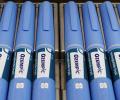
The semaglutide patent expiry next year could unleash a wave of generic versions from Indian drugmakers, with prices expected to go lower -- at least 80 per cent.
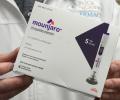
'As more patients are prescribed these drugs, intolerance due to gastrointestinal and other side effects will become more visible, leading to higher discontinuation rates.'

Sun Pharma Ltd has received tentative approval for cancer drug Ondansetron from US Food and Drug Administration.
There is a need to incentivise R&D investments, offer corporate tax concessions and establish an effective intellectual property rights regime in order to push the growth of domestic pharmaceutical industry, as per the industry bodies. Outlining the sector's wish list for the upcoming Union Budget, Organisation of Pharmaceutical Producers of India (OPPI) Director General Anil Matai urged the government to explore methods to incentivise R&D investments, such as deductions on R&D expenses, research-linked incentives for MNCs, and corporate tax concessions.
India's third-largest pharmaceutical company by revenue, Cipla, is up for grabs in a three-way fight between Torrent Pharmaceuticals, Dr Reddy's Laboratories (DRL) and private equity (PE) giant Blackstone. Analysts say it is more likely for a strategic investor like Torrent or DRL to acquire Cipla than a PE firm, which may not derive healthy returns at Cipla's current market price (CMP) after the recent gains.
The Indian pharmaceutical market (IPM) grew 6.8 per cent to touch a turnover of ~1.93 trillion in calendar year 2023, despite volumes going down marginally by 0.9 per cent. This indicates the price increase has been the major growth driver. Growth in the moving annual turnover (the previous 12 months' turnover) in December was 5.1 per cent and that in new product introduction 2.6 per cent, while volumes dipped 0.9 per cent, leading to an overall growth rate of 6.8 per cent, according to the data from market research firm Pharmatrac.
The pharmaceuticals sector is expected to post a revenue growth of around 13.5 per cent and a net profit growth of 30.3 per cent for the third quarter of 2023-24 (FY24), riding on the approval for niche drugs in the US market, fall in raw material prices and correction in shipping rates. In the healthcare segment, hospitals are expected to post revenue growth of 13 per cent during the coverage, while net profit growth would be around 37 per cent, ICICI Securities said in a note. However, the performance may not be comparable on a sequential basis due to the offset of the festive season in Q3FY24, the analysts noted.
Hospitals to recover from sluggish Q3; diagnostics' growth rate at pre-Covid levels.

Cipla has agreed to buy two generics businesses in the United States in an all-cash deal worth $550 million.

An acute drug shortage in the US and stable pricing along with product launches are likely to boost revenues of India's pharmaceutical companies during the first quarter of this financial year, analysts said. Most brokerages estimate a top line growth of around 14-15 per cent, with earnings before interest, taxes, depreciation, and amortisation (Ebitda) growth of 24-30 per cent for Q1 of FY24. Hospitals are, however, likely to report lower occupancy rates, and diagnostics companies may witness an impact from delayed monsoon.
Cipla's fortunes on Monday took a veritable bow after the company said Friday that Q4 net profit dropped 24%.

In his last assignment, he led the global product strategy and commercialisation functions at Novartis Pharma AG.

Hetero has priced the injectable drug at Rs 5,400 per 100 mg vial. With More drugmakers in line to launch the drug soon, the prices may see a further erosion.

Company aims to build five Rs 100 cr-plus brands and launch products from South African arm in domestic market

Samina Vaziralli, daughter of joint Managing Director M K Hamied, was inducted into the company management. Cipla joins the league of major companies such as Lupin, Wockhardt, Elder Pharma, Piramal Healthcare and JB Chemicals in this regard.

Trade generic drugs (medicines that are sold directly through distributors) are fast becoming a key segment for domestic pharma firms as volume growth slows in the overall market. Big companies like Cipla and Alkem have a significant presence in the segment but recently, players like Torrent Pharmaceuticals and Dr Reddy's Laboratories (DRL) have also entered this market. What is driving big pharma's focus on trade generics? The volume growth in the Indian Pharma Market (IPM) has come down from 5.6 per cent in FY16 to 0.1 per cent in FY23.

Drug maker Cipla Ltd is rejigging its China business. The pharma company recently exited a significant part of its investment in its Chinese partner Desano Holdings, while ploughing back a part of the funds into the group's units manufacturing biosimilars and active pharmaceutical ingredients (APIs).

An insider said that over the past decade or so Cipla has become immune to the exits of leaders. There have been no directional change in the long-term strategies.
